Fine Art nude redwoods
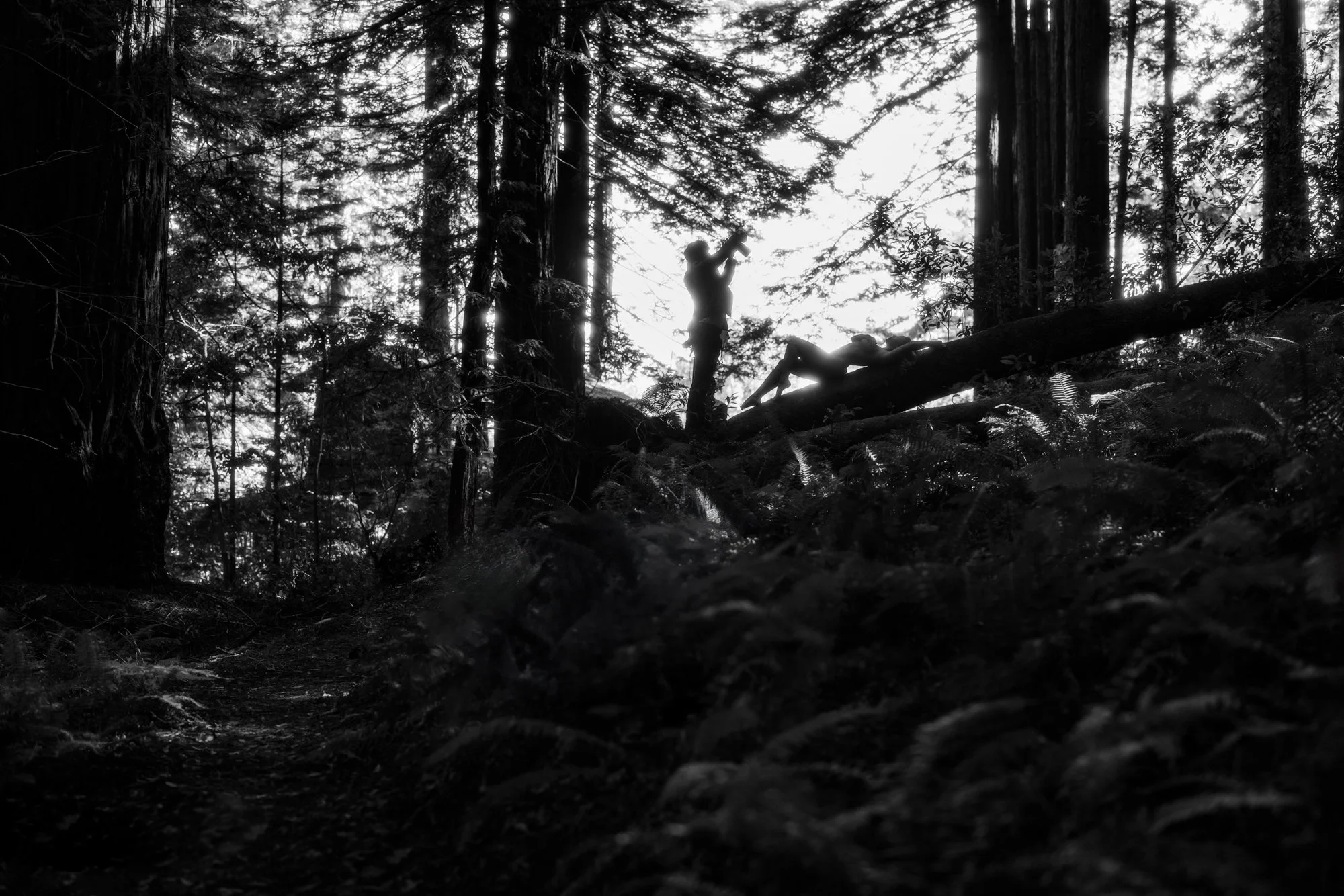
The Wild Form content day in Occidental was built around one central idea:
what happens when the environment is treated as an equal collaborator in the creative process?
With 10 photographers, 2 professional fine art nude models, and 1 boudoir model, this was not a styled shoot in the traditional sense. It was a deliberately constructed experience where set design, landscape, and the human form spoke to one another, sometimes softly, sometimes boldly, but always with intention.
The Redwoods as a Living Gallery
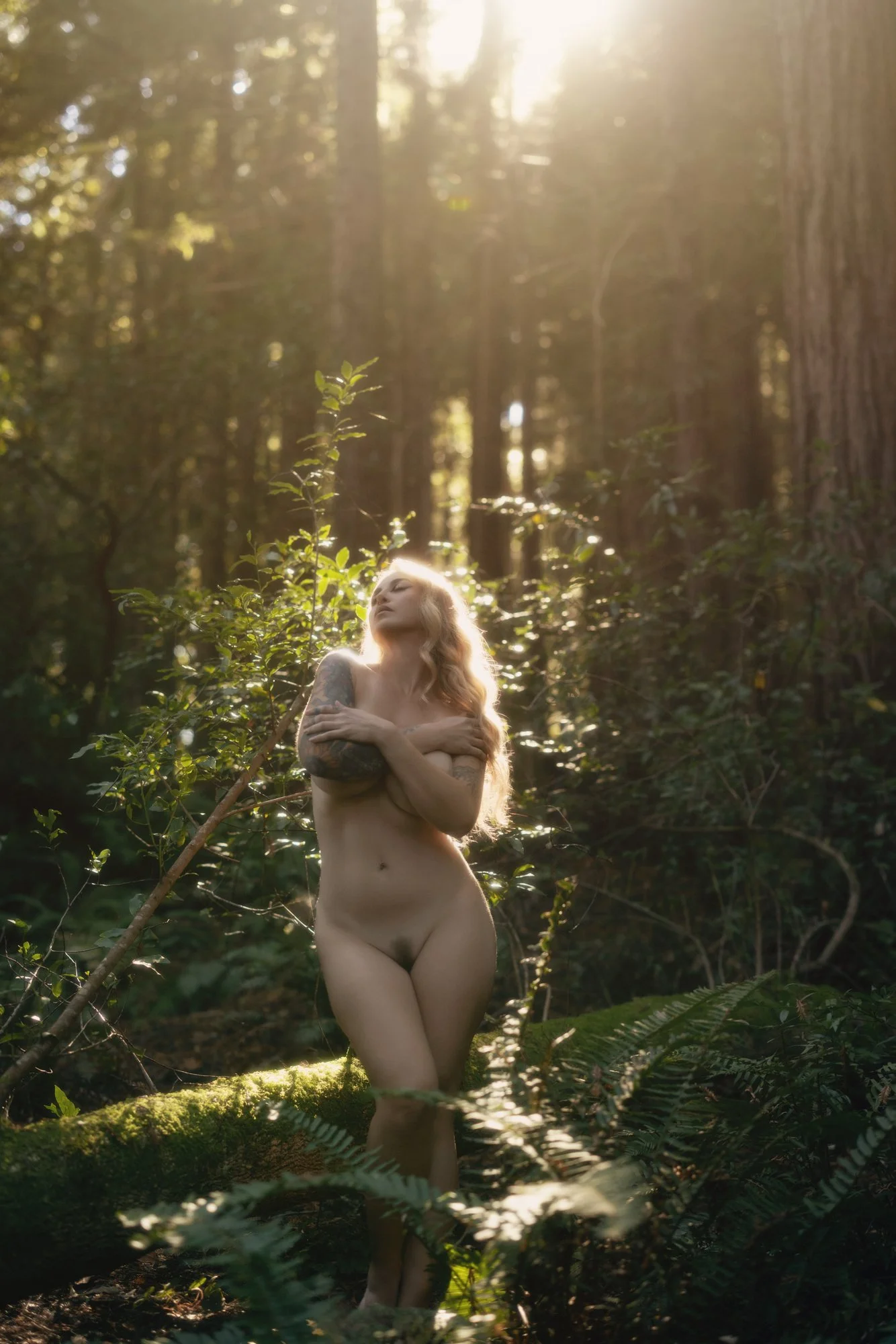
The redwood forest became more than a location. It became a living gallery.
Throughout the woods, frames were suspended from trees, transforming open forest paths into conceptual installations. These frames acted as visual punctuation, inviting photographers to question boundaries:
What does it mean to frame the body?
Where does the art begin and end?
What happens when nature interrupts composition?
Models moved within, through, and beyond the frames, sometimes centered, sometimes partially obscured, allowing photographers to explore depth, layering, and negative space in ways that felt organic rather than staged.
Nothing was static. The forest dictated light, shadow, and rhythm.
Backdrops Placed in the Wild
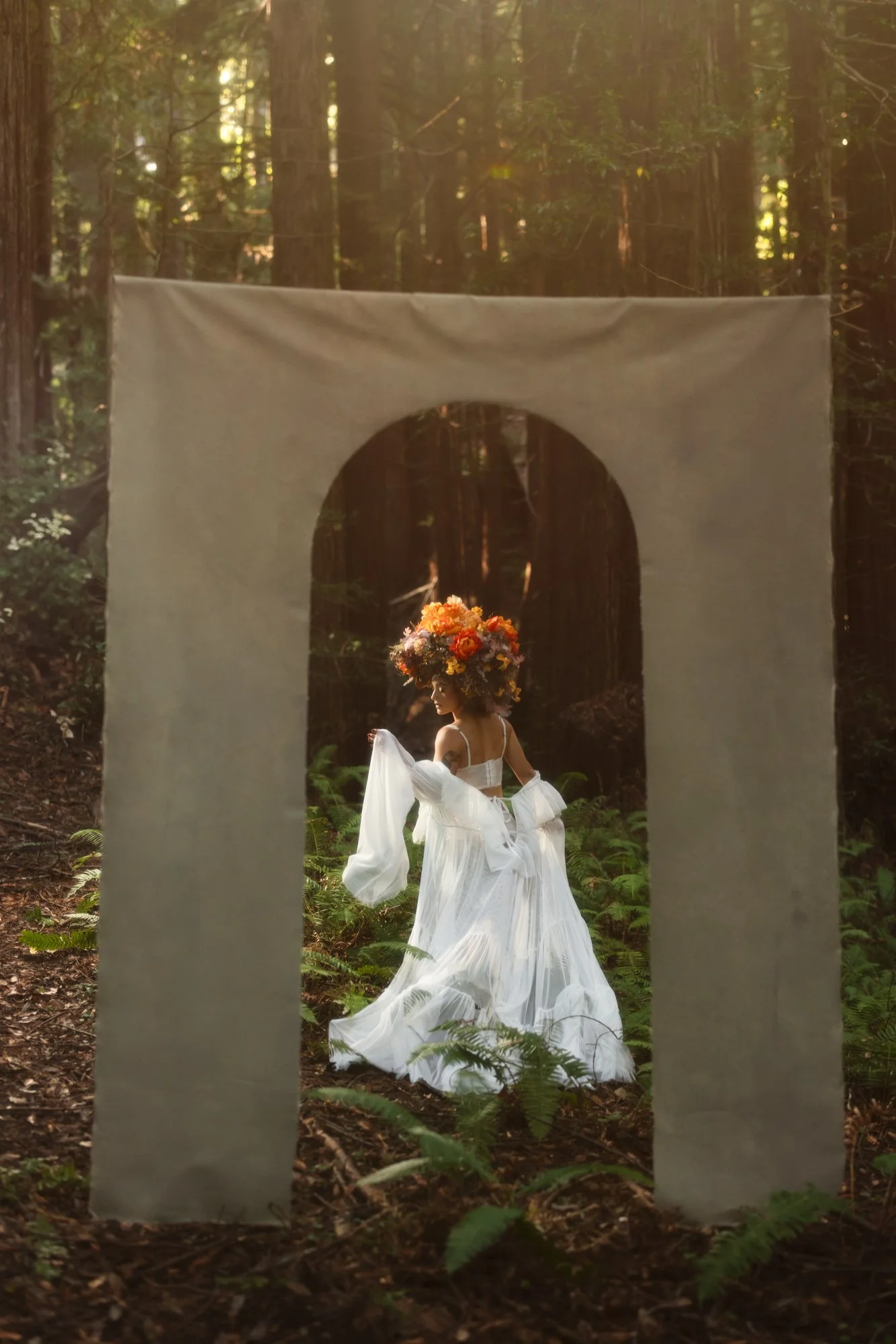
In contrast to the rawness of the redwoods, fabric backdrops were intentionally installed directly within the forest.
This juxtaposition created visual tension:
Soft, controlled textures against rough bark
Clean lines interrupted by branches and ferns
Neutral tones grounding the human form
These backdrops gave photographers a moment of pause, a way to isolate shape and movement without removing the subject from its environment. The result was imagery that felt sculptural, restrained, and deeply intentional.
The body became less about exposure and more about form.
Bodies Forming With the Landscape
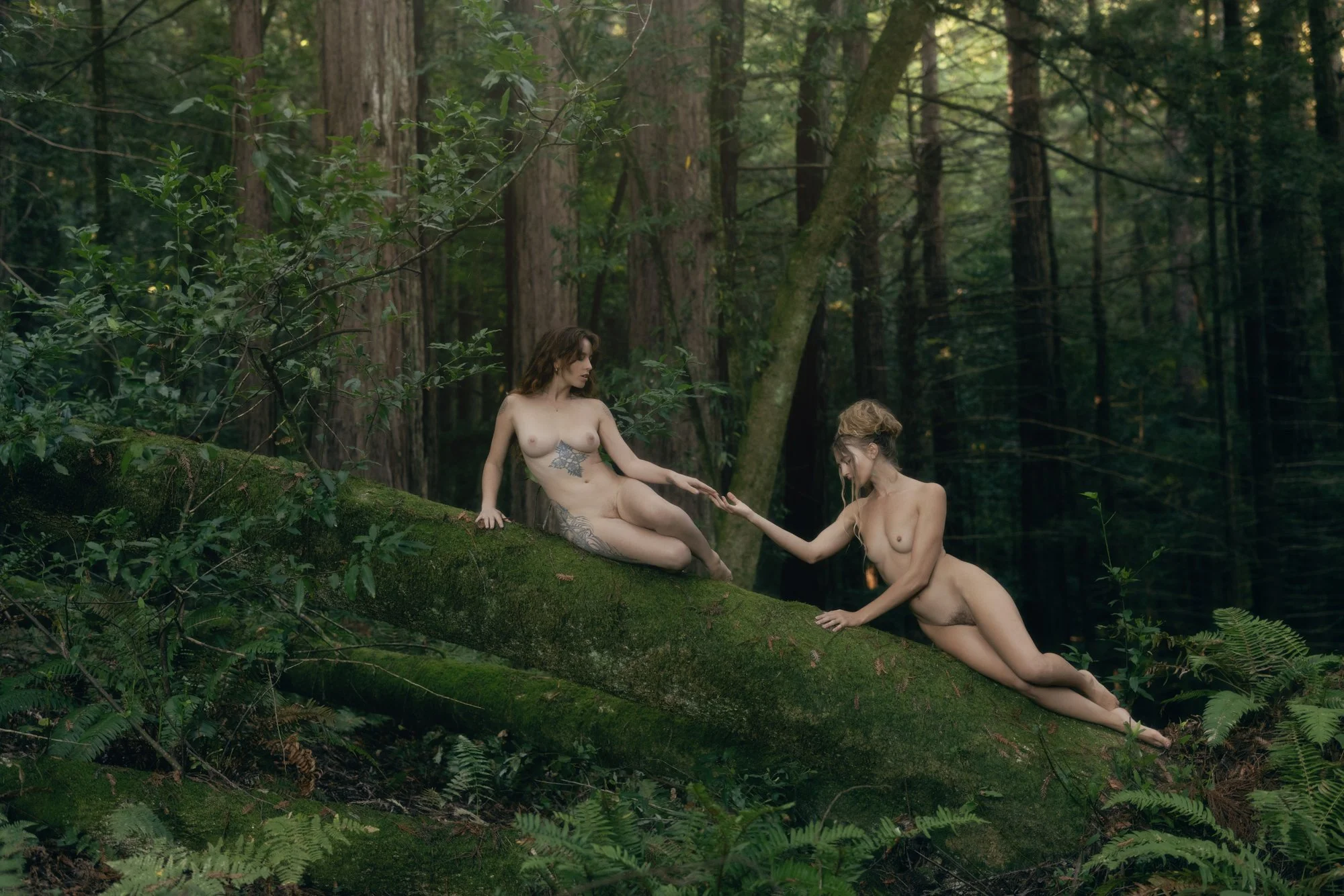
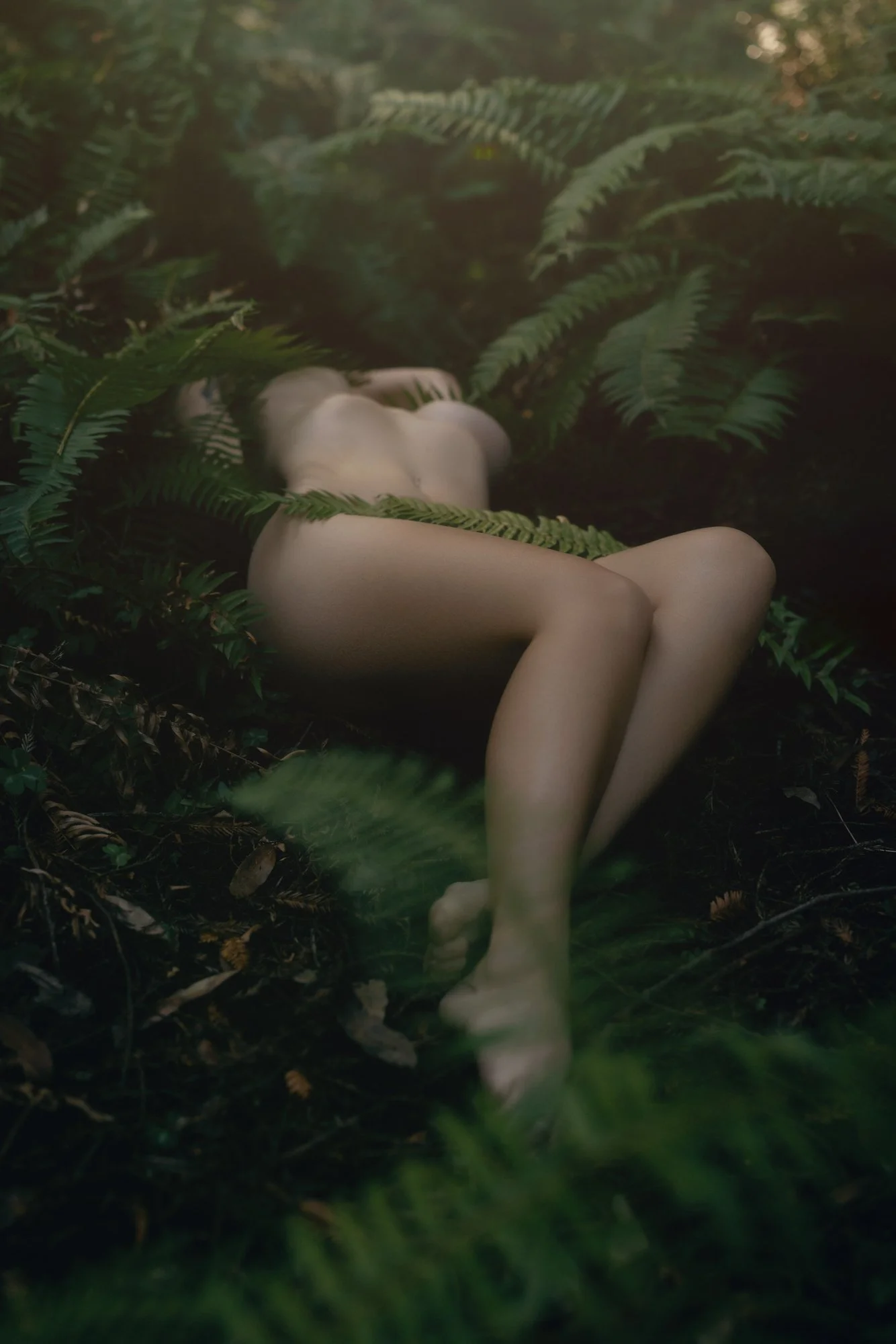
Rather than posing on the environment, the models were guided to form with it.
Spines echoed the verticality of the redwoods.
Limbs followed the curve of fallen logs.
Hands traced moss, bark, and earth.
Movement was slow and responsive, led by breath and sensation rather than instruction. This allowed photographers to capture moments that felt instinctive and grounded, where the body appeared less like a subject and more like an extension of the land itself.
The presence of multiple models encouraged interaction and dialogue, touch, proximity, and shared balance, all held within clear communication and mutual respect.
The Greenhouse Tub: A Shift in Energy
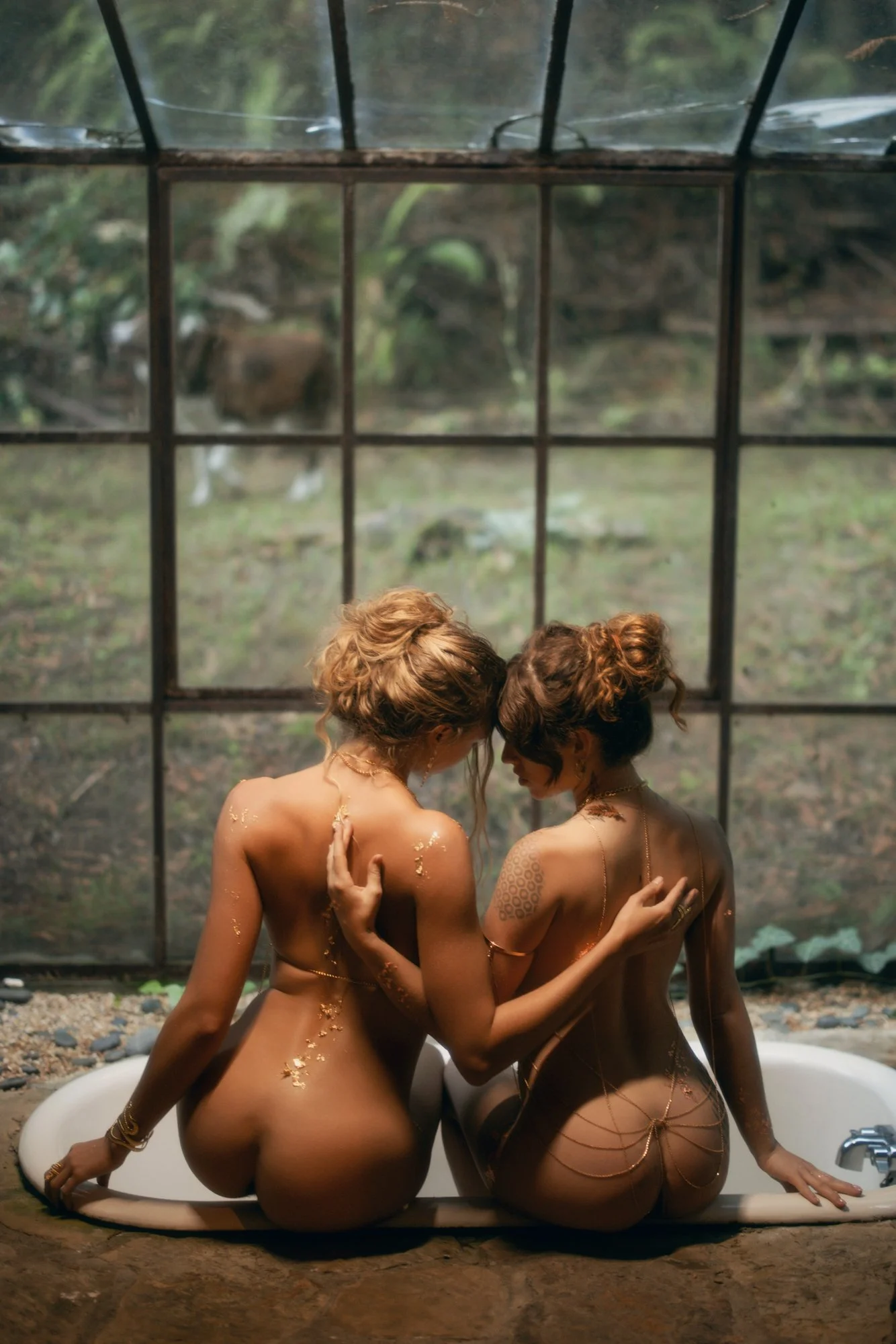
Away from the forest floor, the experience transitioned into a completely different emotional space: a bathtub setup inside a greenhouse.
Where the redwoods were expansive and untamed, the greenhouse offered intimacy and enclosure. Diffused light filtered through glass panes. Moisture and warmth softened the mood. The tub became a vessel for stillness.
This setup leaned into:
Quiet vulnerability
Boudoir-informed intimacy without performance
Subtle gestures over dramatic movement
Photographers slowed down here. Shots became more contemplative, focusing on breath, connection, and the spaces between bodies.
Collaboration as the Foundation
Every element of the day, from the suspended frames to the greenhouse tub, was designed to support collaboration rather than control it.
Photographers rotated naturally between setups.
Ideas evolved in real time.
Models contributed movement, intuition, and emotional intelligence.
There was no hierarchy. Only shared creation.
The work that emerged was not about quantity or trends. It was about honest exploration, images rooted in presence, restraint, and trust.
What This Day Represented
This Wild Form content day was a reminder that set design is not decoration, it is storytelling.
When environments are intentionally built, they don’t dictate outcomes. They invite response. They ask artists to listen.
In the redwoods of Occidental, with frames hanging from trees, fabric suspended among ferns, bodies forming with the land, and water held within glass walls, art wasn’t placed on nature.
It was created with it.
And in that collaboration, something rare happened:
Images that felt timeless.
Experiences that felt embodied.
And a creative process that honored both form and freedom.